Product details description
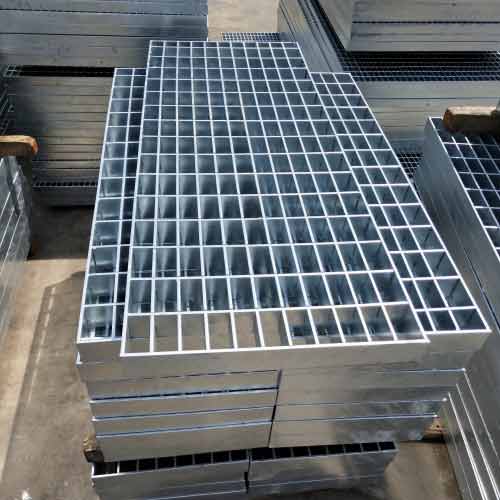
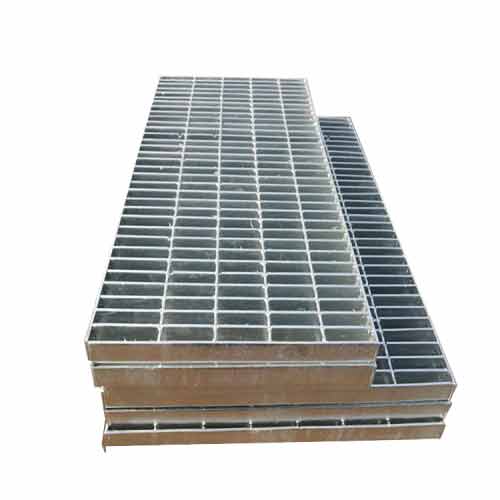
Industrial platform grating systems are engineered structural components
designed to provide safe, durable, and slip-resistant walking surfaces in
demanding environments such as factories, refineries, power plants, offshore
platforms, and chemical processing facilities. These modular floor systems
consist of load-bearing bars arranged in parallel or perpendicular orientations,
interconnected by crossbars or welded nodes to form open grids that allow for
drainage, ventilation, and visibility beneath the walkway. Their open design
reduces accumulation of debris, ice, or liquids, enhancing operational safety
and minimizing maintenance requirements.
Material selection is critical to performance and longevity. Steel
gratings—typically hot-dip galvanized or stainless steel—are favored for
heavy-duty applications requiring high load capacity and corrosion resistance.
Aluminum gratings offer lighter weight and excellent corrosion resistance,
making them ideal for marine or food processing environments where hygiene and
ease of cleaning are paramount. Fiberglass-reinforced plastic (FRP) gratings are
gaining popularity in corrosive settings such as wastewater treatment plants or
pulp and paper mills, offering non-conductive, non-magnetic, and
chemical-resistant properties alongside reduced maintenance costs.
Load ratings and deflection limits are governed by international standards
such as ANSI/NAAMM MBG 531 and ASTM A1011, which define allowable spans, bearing
capacities, and safety factors based on bar size, spacing, and support
conditions. Designers must account for live loads (personnel, equipment), impact
forces, and environmental factors like wind uplift or thermal expansion.
Anti-slip surfaces are commonly achieved through serrated or punched bar tops,
grit-coated finishes, or raised tread plates, ensuring secure footing even under
wet or oily conditions. Custom configurations—including stair treads, ramps, and
curved sections—are readily fabricated to meet site-specific geometries and
workflow demands.
Integration with other safety systems enhances overall platform
functionality. Guardrails, toe boards, and fall arrest anchors can be seamlessly
incorporated into grating frameworks to comply with OSHA and local regulatory
codes. Lighting fixtures, cable trays, and fire suppression systems are often
mounted directly onto grating supports, optimizing space utilization. Regular
inspection and preventive maintenance—such as checking weld integrity, corrosion
levels, and slip-resistance coatings—are essential to sustain performance over
decades of service. As industrial automation and modular construction trends
accelerate, platform grating systems continue to evolve as adaptable, scalable,
and safety-critical infrastructure elements.
Previous article:
Stainless Steel vs Galvanized Steel Grating
Next article:
Heavy-Duty vs Light-Duty Steel Grating: Application-Specific Selection Criteria