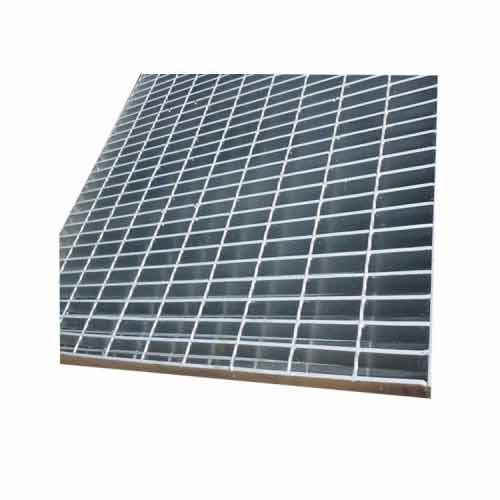
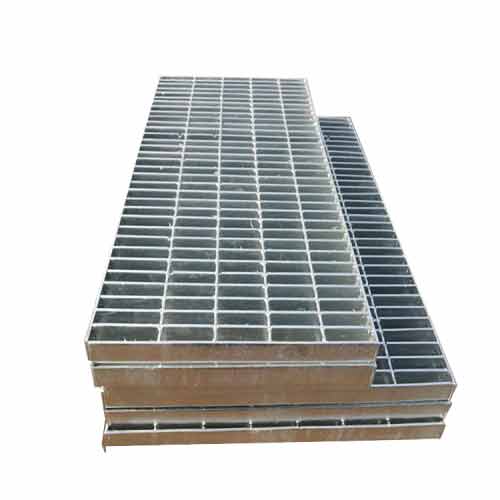
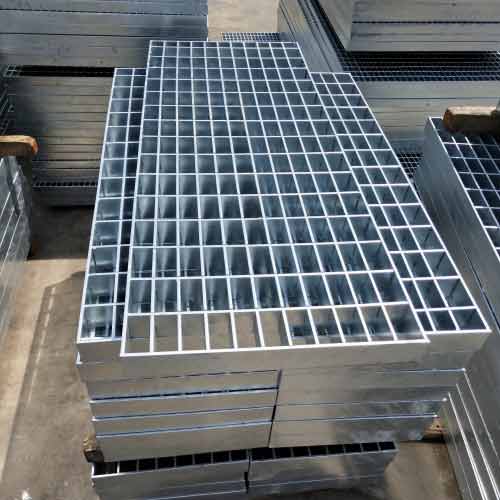
Product details description
Industrial steel grating is a cornerstone of platforms, walkways, and stair
treads in factories, refineries, and offshore structures, where load capacity is
non-negotiable for worker safety and operational continuity. Determining and
optimizing this capacity requires analyzing material properties, grating type,
span, and loading conditions.
Material strength sets the baseline. Carbon steel grating, the most common
type, derives load capacity from the yield strength of the steel (typically
36–50 ksi for A36 grade). Stainless steel (304 or 316) offers higher corrosion
resistance but similar strength, while aluminum grating sacrifices some strength
(yield ~35 ksi) for lightweight and non-sparking properties in hazardous
environments.
Grating type dictates load distribution. Welded grating, with crossbars
fused to bearing bars, provides uniform strength and is ideal for heavy loads.
Press-locked grating, where bars are hydraulically locked, offers smoother
surfaces and higher load capacity per unit weight, suited for pedestrian
walkways. Swage-locked grating, with twisted bars, balances strength and cost
for medium-duty applications.
Span and support conditions are critical variables. Load capacity decreases
with increasing span: a grating spanning 3 feet can support far more weight than
one spanning 6 feet. Simply supported spans (resting on beams at both ends) are
standard, but fixed spans (anchored at ends) enhance load capacity by reducing
deflection. Support beam spacing (typically 4–6 feet) must be matched to grating
strength to prevent overloading.
Loading conditions define real-world performance. Uniformly distributed
loads (UDL), such as crowds or equipment, are the primary design metric, with
standard ratings ranging from 100–500 psf (pounds per square foot). Concentrated
loads, like forklift wheels, require higher local strength—grating with closer
bearing bar spacing (e.g., 1 inch vs. 2 inches) resists point loading better.
Dynamic loads (impact from moving machinery) necessitate derating capacity by
20–30% to account for fatigue.
Testing and standards ensure reliability. ASTM E2950 outlines load testing
procedures, involving applying incremental loads to measure deflection and
failure points. OSHA and ANSI standards mandate minimum load ratings for
industrial platforms (e.g., 150 psf UDL plus 2000 lb concentrated load). Regular
inspections for corrosion, deformation, or missing welds maintain capacity over
time. By integrating material science with structural engineering, industrial
steel grating delivers safe, durable access solutions for demanding
environments.
Previous article:
Maintaining Galvanized Steel Grating: Tips to Extend Service Life
Next article:
Stainless Steel vs Galvanized Steel Grating